The Silent Shift in Deliveries: How Amazon Is Taking Control
It’s strange how the biggest changes often arrive quietly.
No loud announcement. No dramatic shift. Just a small headline—easy to scroll past—that says something much bigger is happening underneath.
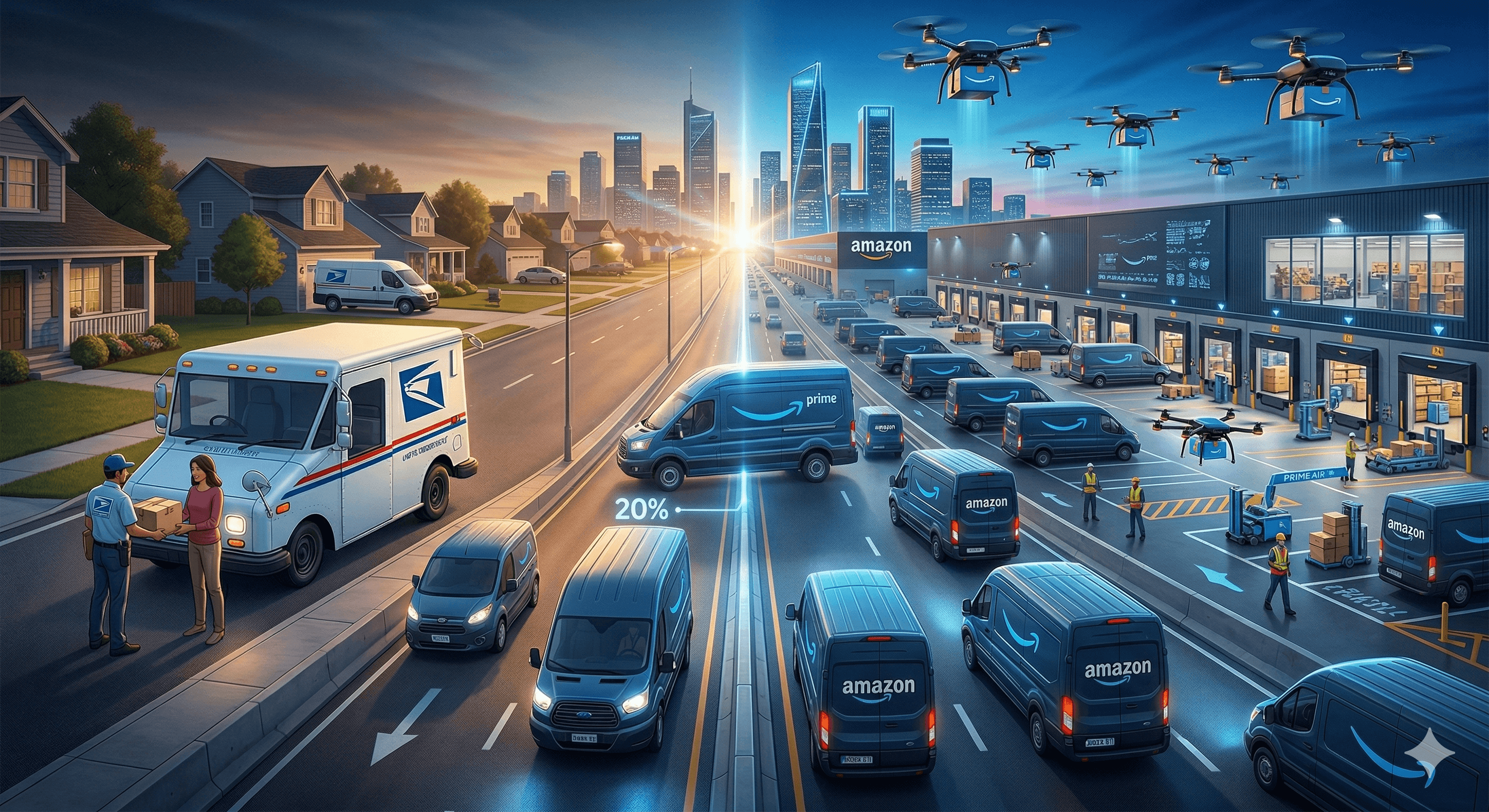
Recently, Amazon made a move that could reshape how millions of packages reach people: a new deal that reduces its reliance on United States Postal Service deliveries by around 20%.
At first glance, it sounds like a simple operational tweak. But if you look closer, it tells a deeper story about how logistics, control, and efficiency are evolving in the modern world.
For years, USPS played a crucial role in Amazon’s delivery network—especially for that “last mile,” the final step where packages travel from a local hub to your doorstep. It was reliable, widespread, and deeply embedded in the system.
But Amazon has never been a company that stays dependent for too long.
Slowly, almost invisibly, it has been building its own logistics empire—delivery vans, cargo planes, warehouses, and even local delivery partners. What once depended heavily on external systems is now becoming increasingly self-sufficient.
This new deal is just another step in that direction.
By cutting down USPS deliveries by 20%, Amazon is signaling something important: control matters more than ever. When you control your delivery network, you control speed, cost, customer experience—and ultimately, trust.
Think about it. When your package arrives early, you credit Amazon. When it’s delayed, you blame Amazon. So naturally, Amazon wants to own as much of that experience as possible.
There are clear benefits to this shift.
For Amazon, it means faster deliveries, optimized routes, and potentially lower long-term costs. It can experiment more, innovate faster, and fine-tune every part of the delivery journey.
For customers, this could mean even quicker deliveries and more predictable timelines.
But not everything about this change is smooth.
For USPS, losing a portion of Amazon’s volume could impact revenue, especially since Amazon has been one of its largest shipping partners. While USPS still serves a massive role across the country, shifts like this can ripple through its operations.
There’s also a broader concern: when one company builds so much control over an entire system, it raises questions about competition and dependency. Smaller businesses and delivery services may find it harder to compete in a space increasingly dominated by one giant.
And then there’s the human side.
Behind every delivery network are thousands of workers—drivers, warehouse staff, logistics planners. As systems evolve, so do the expectations, pressures, and working conditions. Efficiency often comes at a cost, and it’s worth asking who carries that burden.
So what does this really mean?
It’s not just about Amazon or USPS.
It’s about a larger shift happening around us—where companies are no longer just platforms or marketplaces. They are becoming complete ecosystems, controlling everything from production to delivery.
We’re moving into a world where speed is expected, control is prioritized, and independence is the ultimate goal.
And like most big changes, it didn’t arrive with noise.
Just a small update.
A 20% cut.
But sometimes, that’s all it takes to signal the future.