The Future of Design Is Here: AI-Powered Homes and Workspaces
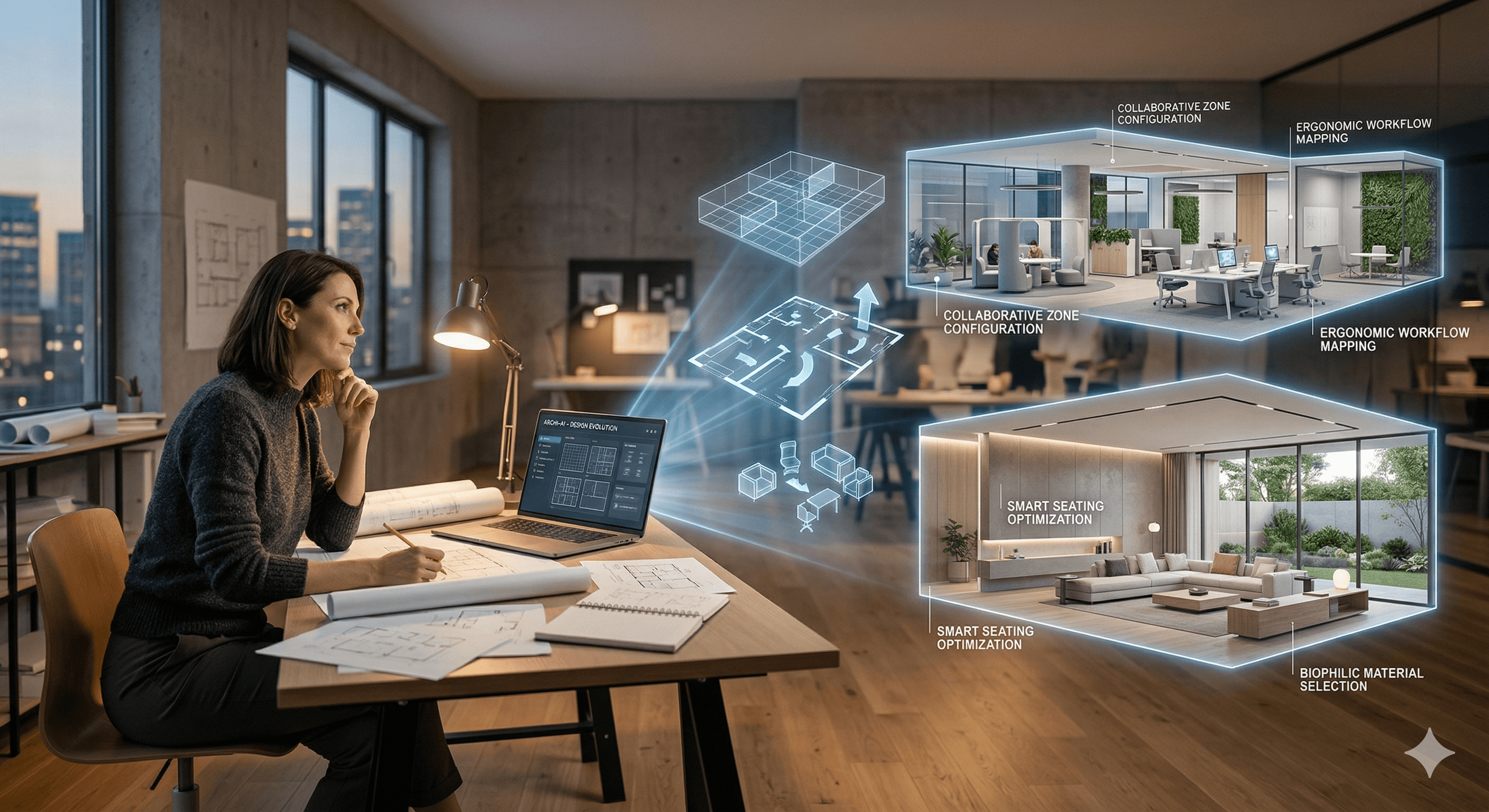
There was a time when designing a home or an office started with imagination—and a lot of guesswork.
You would sit with an architect or designer, flip through catalogs, try to visualize how a sofa would look in a corner, or whether a workspace would actually feel productive. Decisions took time, revisions were endless, and even then, the final result sometimes didn’t match what you had imagined.
Then AI entered the picture—and quietly changed the entire experience.
Today, designing spaces is no longer just about imagination. It’s about visualization in real time.
You can take a simple photo of your room, upload it into an AI tool, and instantly see multiple design options—modern, minimal, luxury, or even experimental. What used to take weeks of back-and-forth can now happen in minutes. It feels less like guessing and more like choosing.
In homes, this shift is deeply personal.
AI can understand your preferences—colors you like, lighting styles you prefer, even how you use your space. Based on that, it suggests layouts, furniture placements, and décor ideas that actually fit your lifestyle. Want a cozy bedroom with warm lighting? Or a clean, aesthetic living room for content creation? AI can generate realistic previews before you spend a single rupee.
For offices, the impact is even more strategic.
Design is no longer just about aesthetics—it’s about productivity.
AI helps analyze how people move within a workspace, how teams collaborate, and where inefficiencies exist. It can suggest layouts that improve workflow, reduce distractions, and even enhance employee well-being. Open spaces, quiet zones, meeting areas—everything can be optimized with data, not just intuition.
In corporate environments, AI takes it a step further.
Large organizations deal with complex spaces—multiple floors, departments, and functions. AI can simulate entire layouts, predict usage patterns, and even help reduce costs by optimizing space utilization. It can answer questions like: Do we really need this many meeting rooms? or How can we use this space more efficiently?
This is where design stops being just creative—and becomes intelligent.
One of the biggest advantages of AI in designing is speed.
What once took days or weeks—concept creation, revisions, visualization—can now be done in hours. Designers can explore more ideas, clients can make faster decisions, and projects move ahead without constant delays.
Another powerful benefit is clarity.
Instead of trying to imagine a design through 2D drawings, clients can see near-realistic visuals. This reduces confusion, miscommunication, and costly mistakes. You know what you're getting before it's even built.
But like every advancement, it comes with its own challenges.
AI can generate ideas, but it doesn’t fully understand emotions the way humans do. A space isn’t just about layout—it’s about how it feels. Over-reliance on AI can sometimes lead to designs that look perfect but lack personality.
There’s also the risk of sameness.
When many people use similar tools, designs can start to look alike. The uniqueness that comes from human creativity can get diluted if AI is used without intention.
So where does that leave us?
AI is not replacing designers—it’s redefining them.
The role is shifting from creating everything from scratch to curating, guiding, and enhancing. Designers now have more time to focus on creativity, storytelling, and personalization—while AI handles the heavy lifting.
We are moving into a world where designing is faster, smarter, and more accessible.
Where you don’t just imagine a space—you experience it before it exists.
And maybe that’s the real transformation.
Design is no longer just about how a space looks.
It’s about how intelligently it’s created.